

Yes, it’s finally here. Almost a year (I think) after getting Poppy Cooks ‘The Food You Need’, I’m finally ready to write the review. Coincidentally, just as her new Air-Fryer book is coming out. So, as well as being a review of her last cookbook this may be able to tell you whether her new book is worth a gamble on. Let’s get started.
First off, I have to comment on the actual quality of the paper and feel of the materials. It has a very ‘self-published’ vibe to it, in that the front and back cover are a thin cardboard-y type of material. The pages themselves are thick and shiny so will stand up to a lot of use, longer than potentially the front/back covers will as they’re already bent in places and I can foresee the glue holding the pages in place coming apart fairly quickly if I don’t take care of it.
The actual look of the book also gives off ‘self-published vibes’, mostly due to its font use and photos. The font used is very Comic Sans in style, in that it’s fairly informal and bubbly, and the size of the writing in places is fairly big. However, the font semi-matches Poppy’s informal tone as she heads sections with ‘Recipe Stuff’ and ‘The Tomato Quickie’. The tone and font of writing, in this way, is very reminiscent of her online persona—bubbly, personable and friendly. In this case I don’t say ‘self-published’ as a negative. The book feels like it was all created by a good friend, including notes from the ‘friend’ about her favourite recipes and helpful tips to get them right.

The other ‘self-published’ feeling comes from the photos which, whilst definitely keeping in that ‘friend has made me this’ vibe, are (for the most part) not very well lit or framed. Now, I’m not one who can entirely knock any photography. I’ve been trying and trying but getting a good picture of your cooking’s incredibly hard—and especially when you’re making plain, not-very-good-looking dishes like Lasagne, Parmigiana etc. It can be a nightmare to get the perfect pic. But, I’ve found, with the right lighting you can get away with a lot. There’s a special skill to lighting and framing a shot—and, unfortunately, in this book I’d say that most pages fail on those aspects. It also seems on a few pictures that a filter’s been put over them which makes the orange and yellow-colours really stand out which often make the pictures not very well defined. It’s a shame the pictures don’t quite live up to the recipes inside.

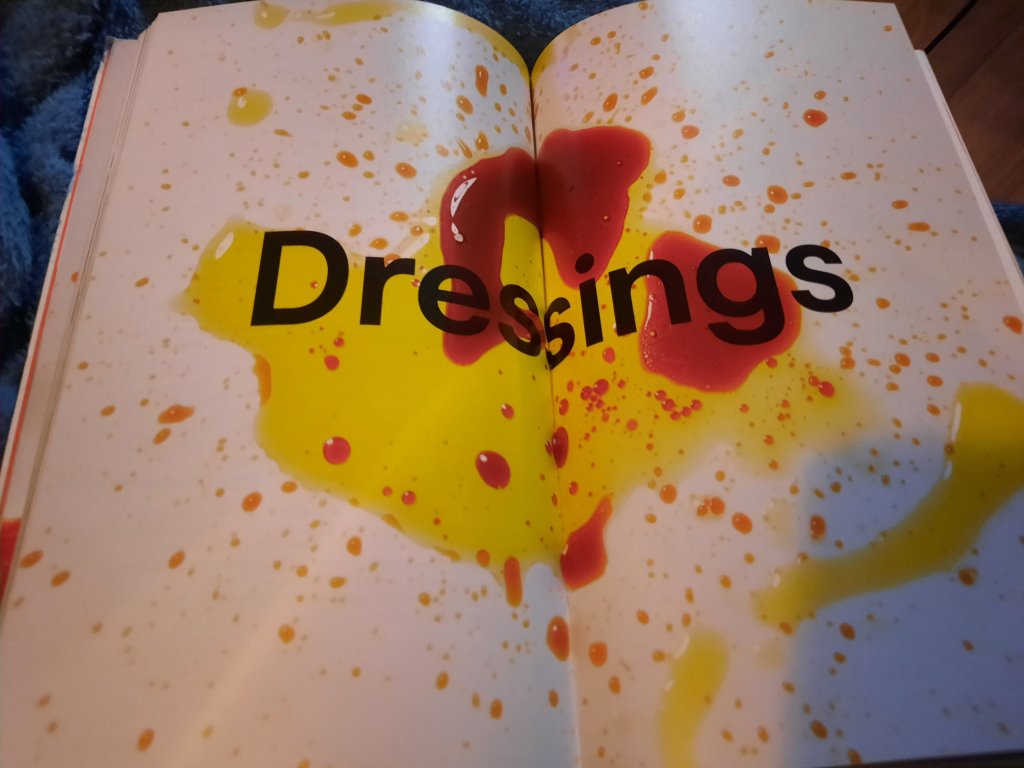
However, I do appreciate the fact that Poppy doesn’t try to hide the chaos and make the pictures clean and polished, as many other books do. Frequently you see used pots in the background, dishes that need cleaning, dirt on the surface, other kitchen equipment just hanging around—all real pictures that look like, again, your friends kitchen. A real kitchen, one that’s lived in. Poppy isn’t hiding from the reality of cooking—again, very reminiscent of her Social Media videos where she also doesn’t shy away from showing the truth. Cooking is a messy business, chef or not. I also have to say I really like the creativity in the Heading Pages pictures (the Savoury Pastry broken on a white surface, the Tomato Sauce spilled artistically a la Michelin-Starred Chef etc.).
Poppy’s book’s strength lies in Poppy’s own strengths online—the book is friendly, welcoming and unapologetic about what it is. It’s not being sold as a perfect representation of haute cuisine, or even chef-level cooking, but it’s being sold on Poppy and what she likes to eat. Every recipe inside feels like Poppy’s favourite foods, the food she loves to cook, and she (again, as our ‘friend’) is sharing that part of herself with us. If you are a big fan of Poppy then you’ll like this book, it’s as simple as that. It’s undeniably her on a page. You can learn a lot about someone by what they like to eat and it’s clear that Poppy’s favourite foods are those comforting dishes you share with the people you love and just make you smile.


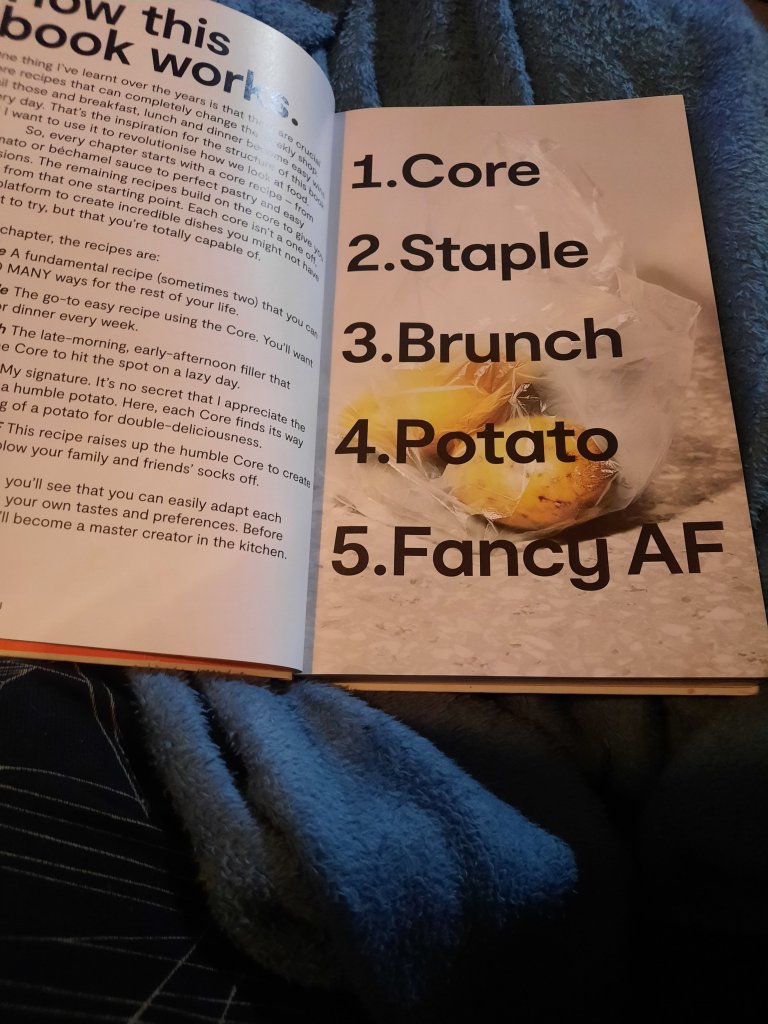
That being said, it wouldn’t be a Cookbook Review without reviewing the recipes. The book is broken into sections and each section is broken into more sections. First Poppy gives us one (or occasionally two or more) Core recipes. That Core recipe then gets used in either the Staple recipe (the recipe everyone should know, simple to do), the Brunch recipe (very Breakfast and Lunch friendly), a Potato Recipe (because it wouldn’t be the Potato Queen’s book without potato-themed recipes) and finally Fancy AF recipes (the recipes that may be a bit harder, take a bit longer but are worth the effort).
Now the category thing I’m mostly okay with. In fact, one of my favourite books (the first book I ever really cooked with, actually) ‘Economy Gastronomy’ also operated on the same idea with a ‘Core recipe’ followed by ways to use it up across the week. MasterChef (UK) also has a cookbook that presents a section with ‘Core Recipes’ that are used throughout the book, as do some of my professional cooking books from my Professional Cookery course days. It’s a fundamental principle of cookery that you start with your basics, your ‘Core’, and then expand from there. So the ‘Core’ as an idea is a very chef-y way to learn but also, I believe, the perfect way to learn. You can do so much once you learn your Cores.
The Staple also makes sense. A simple recipe that most people could do quite easily. The one thing I would change with this section is that I think the ‘Pop Tarts’ in the ‘Sweet Pastry’ section I would have made a Staple and I would make the Strawberry Tart either the second ‘Staple’ or, more likely, put it as ‘Fancy AF (1)’. And this isn’t coming from nowhere. I can make a Strawberry Tart fairly easily. It was one of the earliest things I made because of my love of the French Patisserie on holidays, but it’s not simple. It involves two simple but easy-to-mess-up parts and if they’re messed up the entire thing falls apart (Crème Patisserie and Sweet Pastry). This is me talking as somebody who has messed up Crème Pat on multiple occasions before I got it right, and as someone who’s mother (who also helped to test the book to get a ‘normal’ cooks opinion) admitted she would really struggle with it. The Pot Tarts, however, are simple as anything and involve no big effort. I would think of another recipe to add to Brunch.
However, the Brunch section, of all the sections definitely felt the most random. I understand the idea of ‘Core’ leading to ‘Staple’ leading to ‘Potato’/side leading to ‘Fancy AF’. They all follow a pattern whereby you learn one to get to the next, to get to the next. But Brunch? I assume it was in there to capitalise on the ‘Brunch’ trend in recent food culture but it felt very random. I’m not sure I would’ve included it, or whether I would’ve put it into it’s own section, but often in some sections (okay, mainly ‘Roast Dinners’) it’s completely ignored and skipped. Again, it mostly felt very random but it does differentiate her book from other books I’ve used so maybe I should just write it off as being a ‘quirky’ addition. Honestly, as random as I find it, I’d still really like to have a Brunch recipe to be included in the Roast Dinner section just to keep it consistent throughout the book. Maybe a Brunch recipe that used the Roast Chicken Core Recipe? Like a filled omelette or a different version of Eggs Benedict?
The Potato section had to be included. I think most Poppy fans would be disappointed if potatoes were absent from the self-titled (I think?) Potato Queen and, well, she’s pretty good with them so I’m not going to say no.
And ‘Fancy AF’, as I’ve already said, is her version of Hard or Takes a Long Time but it’s worth it, written in a very colloquial, Internet-way. Again, the issue I found with this section was in ‘Roast Dinners’ as I couldn’t understand why ‘Cauliflower Le Cheese’ was considered a Staple and not Fancy AF. I’ve tasted it, believe me—it tastes Fancy AF.
The ‘Roast Dinner’ section in general was the most confused on the established theme of the book. Not only didn’t it have a Brunch recipe but it also didn’t follow the format of Core-Staple-Brunch-Potato-Fancy AF. There were Staples after Potatoes, the Potato dishes weren’t numbered as they had been in other sections when there were multiples and it was all just a bit muddled. I assume either this was a last minute addition and/or she just really wanted to add a Roast Dinner section and forced it to fit into a book it didn’t really belong in. I’m not complaining, really, even if it sounds like I am. Some of my favourite dishes came from this section. My OCD just acted up when I noticed the differences between it and other chapters.

Now, I said I was going to talk about the recipes and instead I got way-laid talking about layout. Oops. Well, now I’m going to go onto talking about the recipes, I promise. When I test a Cookbook I like to give it a fair shot to impress me, so I always make sure to do at least one (and often more) recipes per section. This is actually why it takes me so long to finish my reviews as I also work on multiple cookbooks at once, write my own recipes and take a break from cooking recipes so that I can focus on writing (I also haven’t been sleeping at night so my hunger’s all gone out the window, but that’s not a problem for you to deal with so…).
With Poppy’s book I’ve done…? Wait, I’ll just check. Yes, precisely I (we) did:
- 13 Core Recipes.
- 4 Staple Recipes.
- 3 Brunch Recipes.
- 5 Potato Recipes.
- 6 Fancy AF Recipes.
And for the most part? We really enjoyed them. But, just putting ‘we really enjoyed them’ isn’t really an in-depth review so, I know what we’ll do. Here’s each dish we made with some notes about how they turned out:
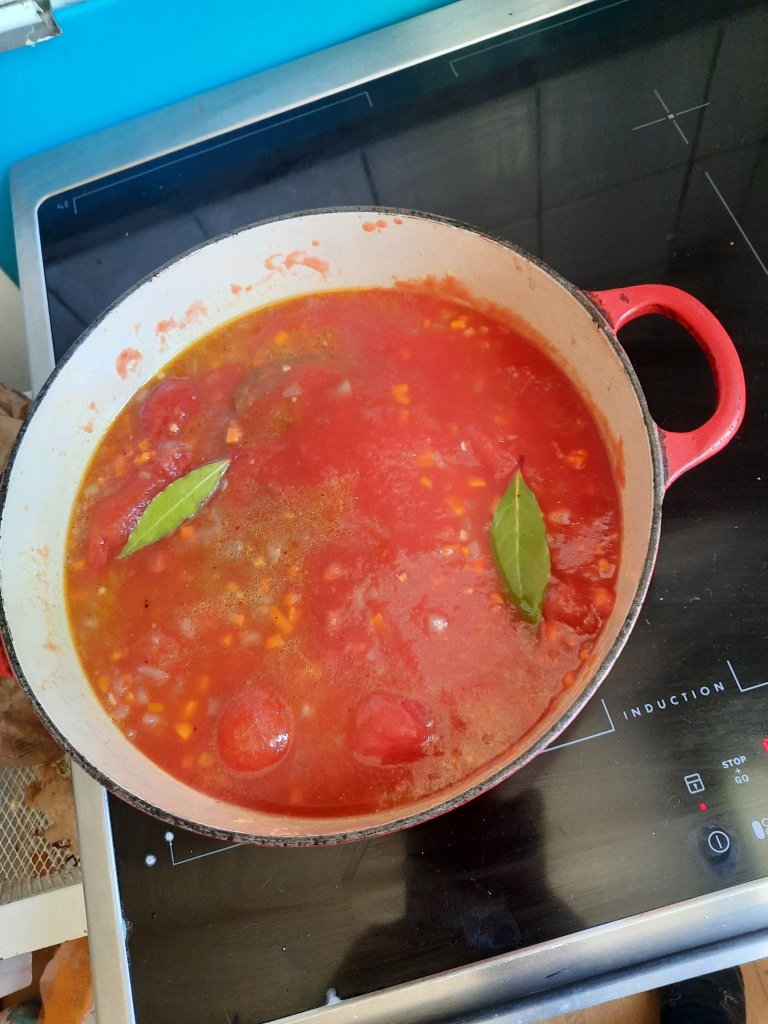
‘Labour of Love Tomato Sauce’—I know I said we really enjoyed them, for the most part, but this was actually one of the recipes we weren’t a big fan of. It took a long time to cook, used tinned tomatoes just like the simpler/quicker recipe and was far more involved than the simpler variation. The hard work didn’t taste like it was worth it in the end as we were left with a sweet, fairly-bland sauce. It may have been the tinned tomatoes we used but I would honestly stick with my own recipe using fresh-tomatoes or do a quick, cheats tinned tomato sauce instead.
Bechamel—I had my Mum test this as I could make Bechamel without much effort (my Mum can also do this but not to the extent that I can). I made sure she followed the recipe, despite her inclination to do it her usual way, and I can say that it works. A fairly standard, flavourful Bechamel for first-time makers.

Cheese Sauce/Cauliflower Le Cheese—I had to put these two in the same bracket as one’s needed to make the other. The cheese sauce is okay. I found it a bit thick around the cauliflower and wished it had a tiny bit more oomph of flavour but for the most part it was a stick-to-your-ribs enjoyable sauce and dish. Next time I would just make the sauce a little bit thinner than the recipe so that it didn’t form such a clump around the cauliflower. That, however, is entirely personal tastes and I’m fairly sure a lot of people would love Poppy’s version more.

Boulangère—Okay, so this was one I knew I had to try. One of my assignments when I was training was Boulangère potatoes—and I’m going to be honest, I hated them. They tasted so bland and the texture was so strange. I had to change my College recipe by adding apples and herbs etc. to get anywhere close to making anything ‘passable’ to me. I knew when I saw this recipe, and saw how different it was from my College one, I had to try it. It was great tasting. It was lovely and buttery, rich and flavourful. It felt ‘bad’ for me in all the best ways. But I don’t think it’s boulangère, mostly due to the texture. Because of the way it’s cooked before it ever reaches the oven the potatoes remain in piles of potatoes—very flavourful potatoes but they don’t meld together the way the traditional boulangère I’ve tried do. It was a lot more work than my other recipes as well, involving a lot more cooking than I would expect for a simple peasant dish that was designed to be thrown into a traditional French Bread Oven at the end of the day when it was cooling down. Was it Boulangère? No. Did it taste better than the Boulangère I’ve had so far? 100 percent, yes.
Easy Flat Breads—Yep. They’re easy… and tasty. These were on our ‘Definite- Must Make Again’ list and set our expectations high for the rest of the book.
Mayo—Again, I had to ask my Mum to make this one as—well, I’m actually terrible at following Mayo recipes. I find it much easier to eye-ball it and I’ve never been successful with a recipe. My Mum however is usually terrible at making Mayo etc. but the Mayo turned out perfectly with Poppy’s recipe. I would recommend doing exactly like Poppy does, with a bowl not a food processor, when you first make Mayo. It helps so that you know what it should look like before you ever attempt to make it quickly. Also, I like her tips on how to create different flavours of Mayo. I love a flavoured mayo. And there’s no worries if you mess it up, Poppy’s got you covered with a tip on how to fix it (as I tell my Mum frequently, the difference between me as a chef and her as a home cook isn’t that I don’t make mistakes, it’s that I stay calm and fix them when they, inevitably, happen).
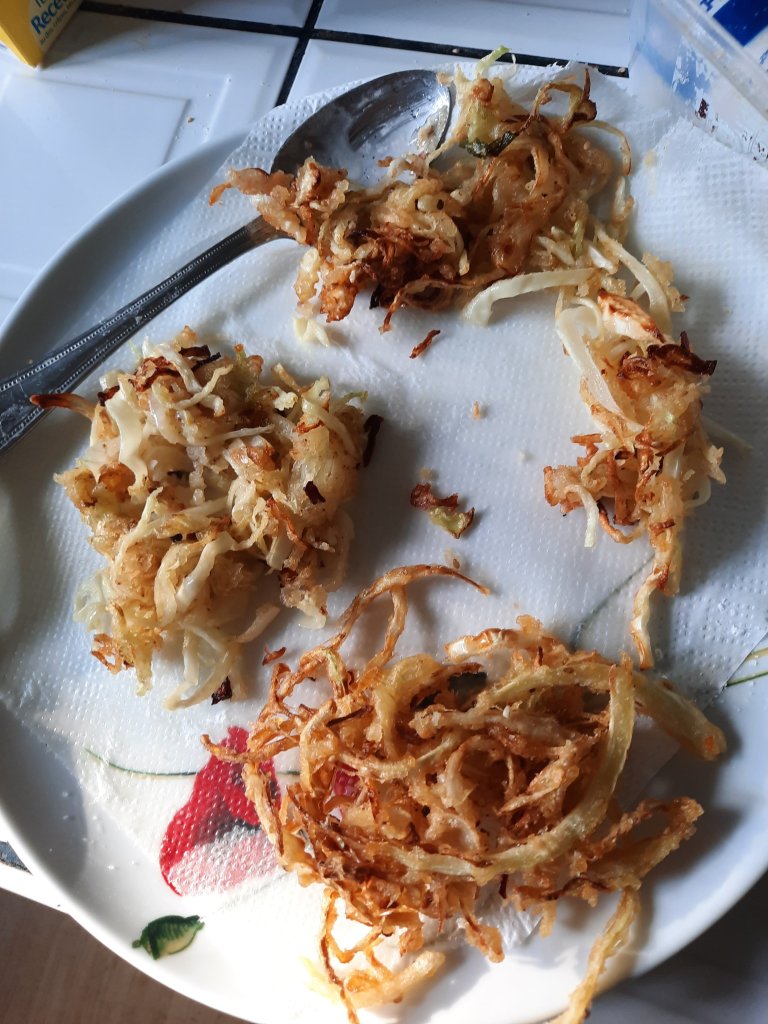
Tempura Batter/Cabbage Fritters and Soy Dip—Some part of me wanted to leave this to the end. Oh, this was a—not so great one. I had my Mum test it… knowing again that batters I can whip up without much thought (Sprite-Batter Recipe coming… maybe soon)—and it was a complete disaster. I’m not even over-selling it. I left her alone in the kitchen for maybe half-an-hour and then she suddenly screamed for me. She was absolutely miserable. The batter was thicker than I would ever make it, it wasn’t sticking to the cabbage at all and the shallow-frying had created a soggy mess. She was practically in tears. I had to come in, make a quick tempura batter from my own head and deep-fry them properly—and then they turned out perfectly. The Soy-Dip was, however, a great accompaniment for the LO-version-Tempura. And don’t worry, my Mum’s since gotten over the ‘Tempura incident’—though she hasn’t forgiven the recipe.


Shortcrust Pastry—Yep, can confirm, is a very good, basic shortcrust recipe. It’s not entirely idiot proof. All pastries take a bit of practice… but, hey, my Mum managed to make this without crying so that’s a plus on the last recipe. Poppy allows the use of a food processor or your hands—and, honestly, either way works. I’d usually recommend if you want it fool-proof, do it in the food processor. With your hands it can easily be overworked and the temperature of your hands does affect pastry (it’s why, when I’m making it with my warmer hands, I barely touch it as I rub the butter in). However, Poppy’s use of ice water is, not only a proper Chef-y tip, but also a great tip to help deal with the temperature issues.
Confit Garlic—By goodness, you get a lot of confit garlic from this recipe. I mean, it all tastes good, but we didn’t use it all up. But you might, so I do recommend you try this recipe. Confit garlic is tasty.
Herb-Roasted Chicken—I’m going to be honest, I have no recollection of eating this chicken. In fact, I really believed we hadn’t cooked any of the Cores in the Roast Dinner section… until I found some notes on my phone about this chicken. Apparently we had the same size chicken as her but it didn’t need the final 15 minutes of cooking time as it was already lovely, well-cooked and moist; it tasted of the rosemary; we put foil on the legs as they were really skinny and we didn’t want them to burn (I think hers were plumper)—and, I had the added note that I would’ve put anyway—the flavour and texture of your chicken will be entirely dependent on the quality of the chicken your cooking. We’re lucky that the chickens in Brittany are extremely well-reared and full of flavour. The chickens we used to get in England, whilst cheaper than the supermarket chickens here, were not close to the quality. I would always recommend when roasting a chicken to buy the best chicken you can afford. After all, the flavour and lynch-pin of your Roast Dinner will be the quality of the main Core-Event. And yes, I do feel bad I completely forgot making this. And yes, it’s probably because it was just a roast chicken and neither my Mum and I get that excited about roast chicken (especially as the supermarkets in our area sell such good cooked, herby ones already).
Sweet Pastry—Like the Shortcrust Pastry, it was a good recipe. I must admit, I made this, though again I can probably make it in my sleep—but I really wanted to make a Bakewell again. I hadn’t made one in ages. The pastry had good flavour, rolled well and was almost like a sable/biscuit crust in texture and flavour. The notes on how long it keeps in the freezer, the use of the fridge etc. were very helpful as it was a very short Sweet Pastry and could easily go wrong. Be careful with sweet pastry, everyone, it’s a fickle beast. Follow Poppy’s (or another professional’s) recipe on this.

Custard—Poppy admits herself in her Crème Brûlée recipe that she’s not a big fan of the usual Crème Brûlée texture… Which I assume must apply to custard as well. The custard was a bit too thin, almost milky, and didn’t have enough of an oomph of flavour. It almost reminded me of the thin custard that passes as Crème Anglaise in my local French supermarket (in texture, not in flavour as the French one has so much vanilla in it, it’s insanely flavourful). The texture made it a nightmare to pipe it into the Spudnuts and the flavour just wasn’t as there as it was in some of Poppy’s other recipes.
Italian Meringue—Yes, I made my Mum test this. Yes, I’ve made a lot of meringue. I have the quantities in my head, I’ve done it that much (blame multiple Cookery Assignments were I made meringue). I tasted it after my Mum made it and it tasted like Italian Meringue. It wasn’t grainy, as they can be, it held it’s shape and she found it an easy recipe to follow. The only thing I would say differently to Poppy is that I’ve left Italian Meringue in a freezer for a week at College, piped it and dried it to make little meringues (my College Teacher was the one who told me to do this). It piped perfectly straight from the freezer (as did my Mum’s when I checked it). A quick google search also confirmed that you can store it in an air-tight container for months/weeks in the freezer (it’s also not ‘raw’ as Poppy’s recipe suggests—the molten sugar cooks the eggs). The one tip I would add to this recipe—did you know you can use leftover Italian Meringue to make dried meringue nests, like French meringue? Just pipe it as you would normally and then dehydrate in a low oven, warming drawer or dehydrator.
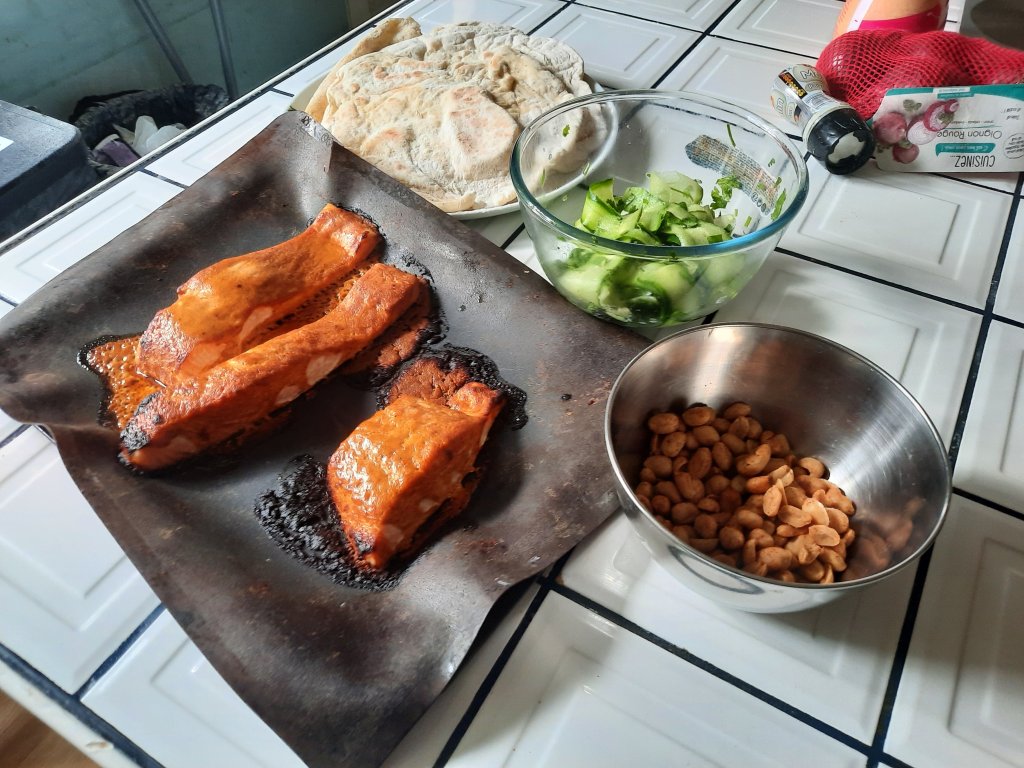
Tikka Salmon Wraps—I think it’s already clear that I loved the wrap recipe and I loved the Salmon etc. that went into it too. I wish I hadn’t started writing about them now as I’m craving them like crazy.
The Chicken Caesar—I love Chicken Caesar salad. It’s probably (at least currently) my favourite salad. Poppy’s was mostly okay. Both my Mum and I felt like it could do with some more greenery, less mayo and more cheese and then it would be getting close to perfect. We are however spoiled as the local restaurants in France do amazing Caesar salads… even the supermarkets and the ferries back to England. This salad’s flavour is also dependent on the base products used like the chicken, salad leaves etc. so that definitely could be playing a part in the quality though.

Cheese and Onion Pie—A very tasty pie with quality pastry. We would make this again but we’d add some more stability to the filling (we’re mainly thinking potato at the minute). Because the cheese sauce inside is so loose you often eat sauce alone or pastry with not much sauce on it so it feels like there’s a filling missing. A filling that has more… texture, maybe? I think I’d prefer this sauce if it were in a puff pastry hand-sized package like a parcel of cheese sauce. Also the onions really need to be allowed more time to become lovely and caramelised to oomph their flavour.

Ain’t Mushroom For Lunch—Again, not one I remember making but was in my pictures I’d taken for this review. I’m pretty sure we enjoyed it though as we’ve had multiple variations on the idea Post-Poppy’s recipe. Most likely we just forgot were the original was from… but now I know (and will most likely forget again, unfortunately).
Pop’s Pop Tarts—I mean, they were the nice Sweet Pastry with jam in the centre, what can be wrong about that? They’re simple to do, I’d imagine fun to decorate with your kids—and yes, your eyes do not deceive you. I did indeed cut them into ghosts instead of rectangles. It was near Halloween and I’d never used the cookie cutter before. I honestly don’t even know why or when I got the cookie cutter but I wasn’t not going to use it. Oh, and also, I didn’t use the icing in Poppy’s recipe as I was trying to use up the Cheesecake from the Fancy AF recipe from this section. Not bad tasting but I think they’d be better with Poppy’s icing.

Lemon-Roasted Potatoes with Feta Dressing—This was the first recipe I’d done from the book that I recognized from Poppy’s Social Media videos. I’d been excited to do them from the moment I saw the video pop up on my feed… and, honestly, it was a game of two halves. The Lemon-Roasted Potatoes themselves were absolutely amazing and packed with flavour. The Feta Dressing was a nightmare to make and didn’t really add anything to the already delicious potatoes. My Mum tried to make the dressing first. It split. Then I stepped in, followed Poppy’s recipe from beginning to end and, whilst it wasn’t as spilt, it very quickly became more and more split as we ate it. The issue with it is, although I would very much recommend if you want the Feta flavour you should just crumble some feta on the potatoes, I don’t actually think it’s necessary. The feta and the potatoes are very similar in flavour and texture so neither really adds anything to the other. Personally I would just make the potatoes and eat them up without the feta like a little potato goblin.


Garlic Buttered Crispy Gnocchi—The recipe needs more flour as they were falling apart when fried. The butter made everything taste greasy on your tongue and the flavour wasn’t as herby as I would like. I’m yet to try any Gnocchi recipe with butter sauce that matches a supermarket Gnocchi with tomato/cream sauce —I will say though, Poppy’s recipe got closer to good than any of the other versions of this I’ve tried.

Apple Mash—I have nothing more to say than, yes. I loved this. The addition of the apple gave a sourness to the mash that went perfectly with the meat.
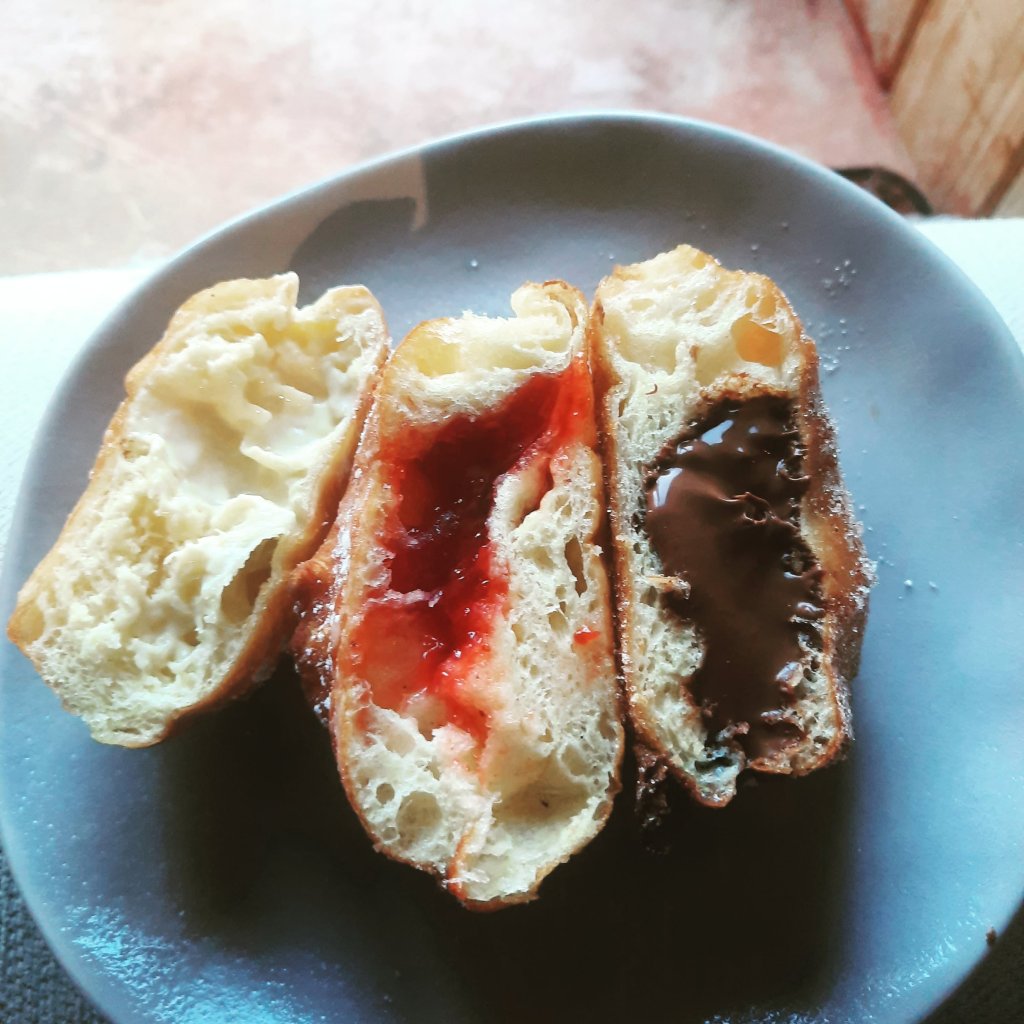
Custard Spudnuts—Okay, I’ve already mentioned—custard, didn’t work, wouldn’t go in the Spudnut—but the dough itself was amazing (bar me adding a bit too much salt). One of the problems, often, with enriched doughs is that the second step when you add your eggs and butter (enrichers) is a nightmare to do by hand or by machine. It takes a long time, makes you want to cry (when done by hand—my teacher could be cruel sometimes) and causes you to get grease all over your hands. This method, however, (based on an old recipe from decades ago as I discovered through B. Dylan Hollis’ videos) is the easiest method to enrich your dough. The mashed potatoes, already containing your enrichers melted into them, is easy even by hand to mix through and the dough at the end comes out wonderfully light and airy. On the picture (below) you can even see all the air-pockets in the dough. I will definitely be making these again. I’ll just change the filling or make mini versions and dip them into some lovely Apple Caramel and Dark Chocolate sauces.

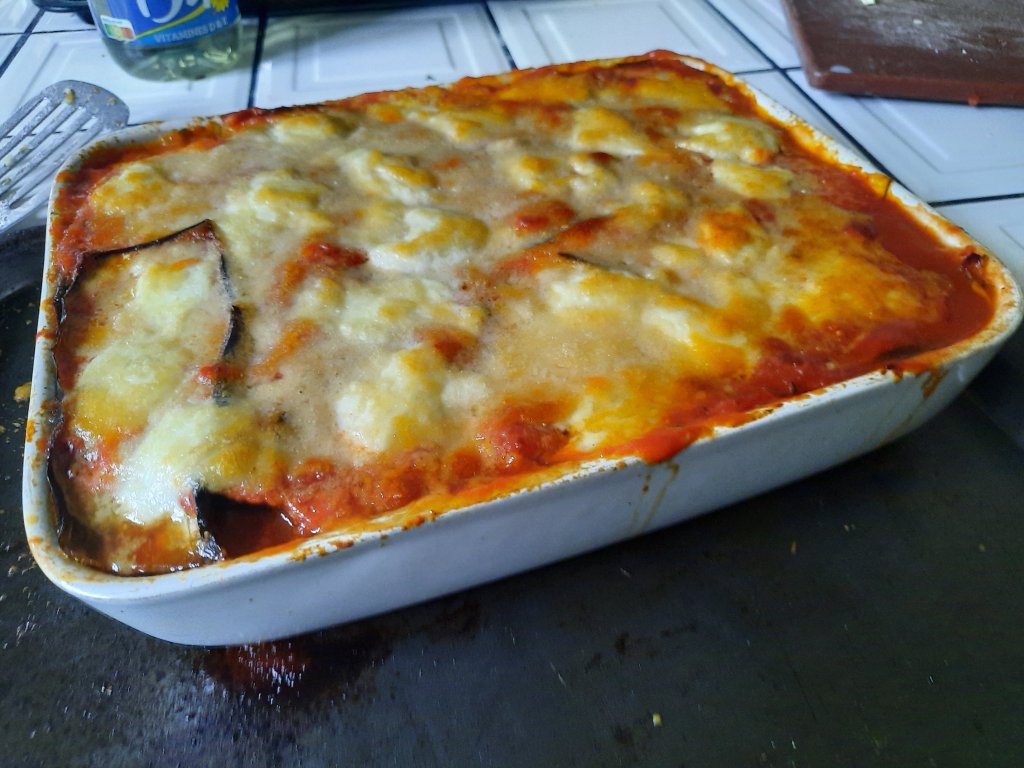
Aubergine Parmigiana—I’d been excited to make this since I first had it at Disneyland Paris’ Hotel New York and, luckily for me, Poppy’s book came out around the same time with the recipe inside. It was easy to make, tasty—but not as tasty as the one I’d fallen in love with. The aubergine was a bit chewy, the sauce (as already described) lacking some depth of flavour and the cheese was not the most flavoursome either.
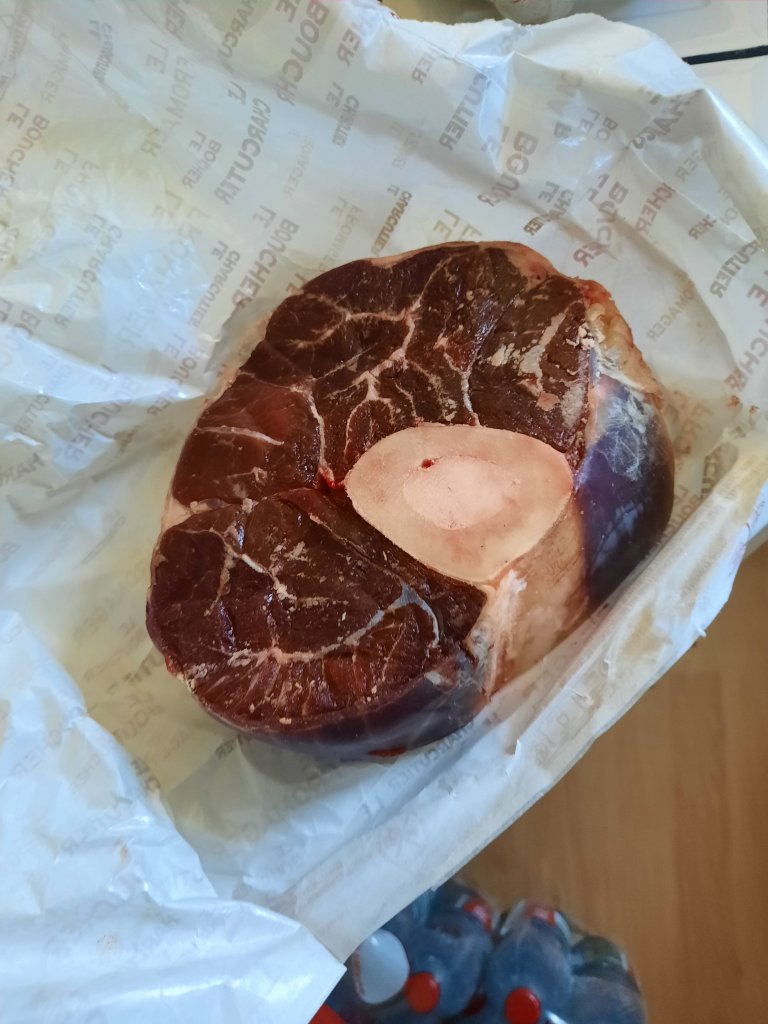
Beef Shin Lasagne—If I was excited about the previous recipe, I was even more excited for this one. I don’t really eat ‘meat-based’ lasagnes. In fact I haven’t had a bite of one—maybe, ever? I usually eat a vegetarian lasagne or a version of Good Food Magazine’s old ‘Healthy’ version which I add chorizo to for some meatiness—but not traditional meat lasagnes… because I hate minced-meat and most lasagne recipes contain minced-meat. Poppy’s recipe entirely uses beef shin so I could finally try a meat-based lasagne. I think I hyped it up too much in my head. The flavour, like a few other recipes, just didn’t have enough oomph and—the main reason I didn’t enjoy it—the texture all blended into one mushy mess in your mouth (meaning all the flavours melded into one in your mouth). I know that it’s traditional to put white sauce in multiple layers but I think I would prefer it to be just on the top and the dish is just crying out for some texture… a bit of crunch from something. And more oomph from the flavour. The Beef Shin we’d got for this dish was beautiful. I’m just sad the dish it was used in didn’t live up to my expectations. (A Note From my Mum who tasted the beef pre-lasagne—the actual beef was really nice until it was added into the lasagne and disappeared into the mushy-texture).

Honey Parsnip Crumble/Butter-Roasted Carrots/Braised Red Cabbage—I swear that my head must’ve been somewhere else when I tested the Roast Dinner section because I yet again don’t remember making or eating these. It seems that I enjoyed them and the recipes seemed simple enough when I re-read them. The only vague thing I remember is that my Mum and I found the Braised Cabbage slightly too sweet. I’m sorry—I’ll try and be better at remembering next time… and not lose my notes/scatter notes everywhere.
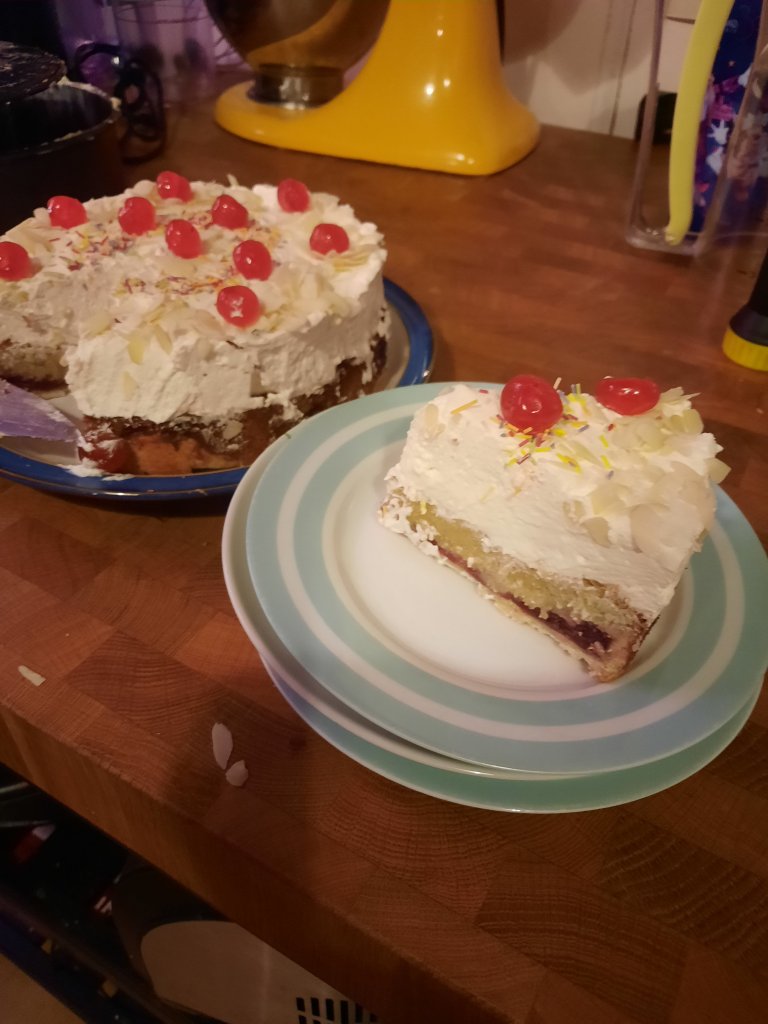
Cherry Bakewell Cheesecake—As you’ve probably already deciphered from my ‘Pop Tarts’ notes, I made this ‘piece de resistance’. I love making Bakewell Tarts. It was one of my proudest dishes I mastered during my training. It had been a long time since I’d had the chance to make one and I really wanted to test it vs my old favourite (that’s been tweaked to death and is now firmly my ‘LO’ recipe). Poppy’s pastry was tasty, her Bakewell filling fairly decent and her Bakewell recipe fairly fool-proof for beginners (again, be careful with sweet pastry, it’s a fairly hard ‘simple’ skill to master and can go wrong in a multitude of ways). The cheesecake was okay. It was a fairly standard American-style uncooked cheesecake (I’m not a big fan, I’m sorry—I need fruit or lemon curd to make it bearable). It’s very much a ‘go big or go home’ show-off dessert you would make for a Dinner Party. The issue I have with it is, though both parts of the dessert are pretty good, it tastes like two desserts (which it is). They don’t match each other—they’re both really rich with a similar flavour profile—so they’re both just there. If you had one or the other you’d have a far more pleasant eating experience, with a nice coulis or fruit or ice-cream on the side. Personally, though I enjoyed making it once, I would never make the full thing again. One dessert would do just fine for me. However, if you want an impressive behemoth to feed a crowd this is definitely it. Just… bring a lot of friends. It needs a lot of people to finish it or it can get tedious to eat over and over by yourself.
Woo. Take a deep breath. We made it. All of the recipes I made from ‘The Food You Need’ by Poppy Cooks. I just wanted, before I wrapped up, to thank Poppy and everyone else that worked on the book for all the hard work that went into it. I know I had some negatives as well as positives but that doesn’t mean I’m not impressed by everything you managed to do. I especially want to thank them for providing their American audience with a sort-of dictionary that tells them what some words translate to in American-English from UK-English (and I appreciate the cleverness of it’s title: ‘You say potato’…). As someone who lives in France and is constantly having to translate/figure out what I can use in place of an English ingredient or what it is in France, it’s very helpful and considerate to help out your likely audience.
Overall, I’m actually way more impressed with the book than this review may have it sound. I really enjoyed cooking my way through it and a lot of the food felt, not particularly special in any way, but comforting and heart-warming definitely. If I remember, I’ll be 100 percent trying some of these recipes again. I still firmly believe if you’re buying this book it’s because you’re a fan of Poppy’s as it just screams ‘this is Poppy Cooks on a page’. This is, in a similar vane to all celebrity cookbooks, a ‘Personality Cookbook’ as in it’s being sold on the person who wrote it’s popularity. It just so happens with Poppy’s book you also get some pretty helpful tips and tricks along the way.
As for her latest book, I will 100 percent be purchasing it whenever I can. I can’t wait to see what’s she been up to with her Air-Fryer. If you like Poppy Cooks and/or Air-Fryers then I don’t see any reason, yet, why you wouldn’t love her latest Air-Fryer book. And I would urge you to try her old(er) book ‘The Food You Need’ as well for some more insight into Poppy’s kitchen. Poppy invites you to be a friend in ‘The Food You Need’—do you think we keep our friendship in her Air-Fryer book? Maybe…
Though if she reads this review, maybe not. Thank you for reading and I hope you’re all having a great day/night. Wherever you are. Happy cooking.
Signed,
The Literary Onion
P.S. I just wanted to give another thank you to Poppy and her team for all their effort—on this cookbook, on TV, on Social Media—and I don’t just mean with food. You’re unapologetically you Poppy and that’s inspiring to see for so many people. Thank you for being you.
Okay… I’ll stop now, I promise.
Or will I?
It’s half 5 in the morning?
Okay, yes, yes, I will.

 The Literary Onion